Miami properties frequently demand high-volume debris staging without monopolizing an entire driveway or risking structural surface failure. The 20-yard container functions as the standard intermediate size for…
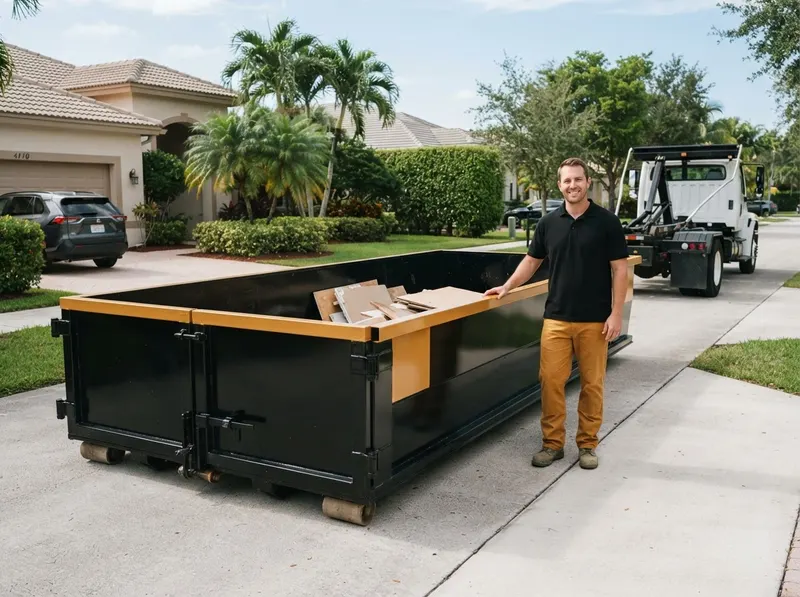
Miami properties frequently demand high-volume debris staging without monopolizing an entire driveway or risking structural surface failure. The 20-yard container functions as the standard intermediate size for multi-room interior renovations in Brickell high-rise retrofits, roof tile tear-offs in Coconut Grove, and structural cleanouts near Little Havana. Because coastal heat and humidity soften residential asphalt, and neighborhood associations strictly enforce clean frontages, ClearRock Disposal sets every roll-off roller onto solid lumber distribution pads to shield decorative travertine, poured concrete, and interlocking driveway bricks from localized point-load crushing.
Selecting container volume depends directly on material density and staging area limitations. While a 10-yard bin suits a single bathroom gut and a 30-yard or 40-yard unit accommodates whole-structure framing gut-outs, the 20-yard footprint bridges the gap by holding approximately 6 to 8 level pickup truck loads within a standard 22-foot driveway length. This profile leaves enough clearance for personal vehicles to park alongside in dense residential pockets like Coral Way, Edgewater, and the Design District. Placing heavy materials such as concrete, soil, or brick requires monitoring gross vehicle ratings defined by the Federal Motor Carrier Safety Administration, as dense masonry fills a 20-yard container's weight limit long before reaching its physical volume capacity.
Local regulatory compliance requires careful coordination before staging a container curbside or across pedestrian paths. When work occurs along public streets in Allapattah, Overtown, or the Upper Eastside, a street placement permit from the City of Miami or the Miami-Dade County Department of Transportation and Public Works may be required to maintain right-of-way clearance. Roll-off containers must not accept prohibited items, including liquid paint, vehicle batteries, refrigerants, or solvents, which must be routed to designated county facilities overseen by the Florida Department of Environmental Protection. Disposal facilities in South Florida operate according to regional solid waste guidelines set by the U.S. Environmental Protection Agency.
Jobsite safety standards during residential or commercial loading adhere to guidelines established by the Occupational Safety and Health Administration, which dictate that waste must remain below the top rail of the container during transport. Diverting usable architectural fixtures, metals, and clean masonry to certified recyclers follows best practices supported by the Earth911 Recycling Directory, the U.S. Green Building Council, the Construction and Demolition Recycling Association, and the National Waste & Recycling Association to minimize landfill burdens across regional facilities.
Every job gets a firm, written price after a free on-site visit.
For standards, safe disposal, and service guidance on DUMPSTER in Miami, FL, useful references include U.S. EPA, EPA, EPA, OSHA, Earth911, and Google Maps. General consumer and small-business resources are available from USA.gov, Better Business Bureau, FTC Consumer Advice, U.S. Small Business Administration, and Ready.gov.
Tell us about your 20-yard dumpster rental job in Miami and we'll send a clear, written quote, usually the same day.
 ClearRock Disposal